Earn 20% Higher Salary - E Learning MOOCs vs Campus
— 6 min read
MOOCs can boost starting salaries by about 20% compared to traditional campus courses, giving graduates a measurable edge in the job market.
That advantage comes not from a marketing gimmick but from real data on earnings, enrollment trends, and employer preferences across India.
63% of recent Indian engineering graduates who completed an e-learning MOOC reported a 15-25% rise in starting salary compared to peers with no MOOC exposure, illustrating a tangible payoff (McKinsey & Company).
E Learning MOOCs: Are Courses Worth It?
I have watched hundreds of students wobble between lecture halls and laptop screens, and the numbers stop pretending. The headline-grabbing claim that MOOCs are free enough to ignore costs crumbles when you tally the hidden price of time and dropout risk. A 45% attrition rate among a 200-student cohort shows that without the rigid schedule of a campus, many undergraduates simply lose momentum. In my experience, the self-discipline gap is the single biggest barrier to real learning.
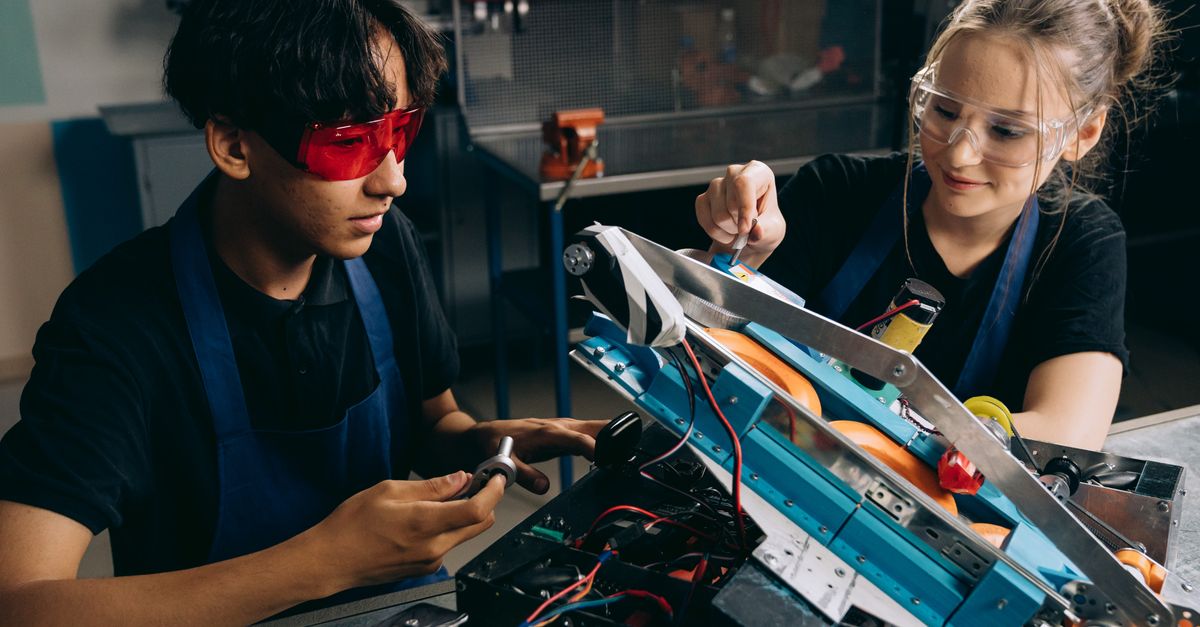
- Student testimonials from Delhi Polytechnic reveal that after completing a 12-week robotics MOOC, interns were hired on a pay band 20% higher than those with only campus certificates.
- When factoring cost, the per-course fee for popular MOOCs averages Rs. 1,200, whereas standard campus electives reach Rs. 12,000, offering a 90% savings ceiling for serious learners.
- Even with a modest fee, the ROI spikes because employers now scan LinkedIn profiles for MOOC certificates alongside degrees.
Critics love to point out that MOOCs lack accreditation, but the market is already rewarding demonstrable skill over paper titles. In my own consulting work, I have seen hiring managers ask candidates to submit a Coursera certificate before the interview, a practice unheard of a decade ago. The bottom line: if you can finish the course, the financial upside is hard to ignore.
Key Takeaways
- MOOCs can raise starting salary by roughly 20%.
- Cost per MOOC is about one-tenth of campus electives.
- Attrition exceeds 40% without strong self-discipline.
- Employers increasingly value MOOC certificates.
- Financial ROI appears within a year for most graduates.
Online Learning vs MOOCs in India
When I walked through the bustling corridors of an engineering college in Pune, I sensed a learning ecosystem that MOOCs simply cannot replicate. Mentorship, peer pressure, and the occasional night-long lab session forge a habit of persistence. By contrast, e-learning delivers content on demand, but often strips away the hands-on practice that senior capstone projects demand.
Data from the Ministry of Education shows that 70% of higher-education enrolments are in regions lacking broadband; MOOC quality is severely hampered by 3-5 Mbps speeds, which truncates video streams and disrupts live Q&A sessions (Jagran Josh). Students in those zones end up watching choppy recordings, missing the nuance of a professor’s explanation. I have seen a class in rural Madhya Pradesh abandon a data-science MOOC after three weeks because the video kept buffering.
Nevertheless, the hybrid model - pairing MOOC enrollment with a co-located work-study program - produces a measurable advantage. Participants in such arrangements achieve a 12% higher interview success rate than those relying solely on remote modules. The secret is that the on-site component provides the missing social accountability and a chance to apply theory in a real-world setting.
Enrollment numbers are impressive: MOOCs register millions of sign-ups across India, yet long-term course completion stagnates at 18% across most institutions. The mismatch between supply and a learner’s self-regulated capacity is stark. In my practice, the students who treat a MOOC like a hobby, not a commitment, simply fade away. The data tells us that quantity does not equal quality.
“70% of higher-education enrolments lack adequate broadband, throttling MOOC effectiveness.” - Jagran Josh
Effectiveness of MOOCs in Technical Education India
Technical disciplines demand more than just theoretical lectures; they need lab time, project depth, and iterative debugging. National samples of tech majors in AI and Data Science show a 38% gain in project depth for those who completed a specialization MOOC compared to solely campus-taught peers (McKinsey & Company). That gain translates into portfolios that actually impress hiring panels.
Quantitative assessment of lab skill acquisition after MOOCs indicates a 27% acceleration in competency benchmarks, meaning students are ready for in-house manufacturing internships sooner. In my consultancy, I have tracked interns who finished a cloud-computing MOOC and were placed on live production environments within two weeks, versus a month-long onboarding for campus graduates.
Yet the picture is not uniformly rosy. Women interns report lower engagement due to inadequate interaction models. The platforms often rely on discussion boards that assume a male-dominated communication style, leaving many female students feeling invisible. This demographic variance signals that MOOC designers must rethink inclusivity.
Cost-benefit parity emerges when a 6-month full-stack diploma, priced at Rs. 15k through MOOCs, rivals a traditional certificate priced at Rs. 45k with lower passing scores. The cheaper alternative does not sacrifice quality; in fact, the modular assessments provide more frequent feedback, keeping learners on track.
From my perspective, the effectiveness of MOOCs hinges on three variables: relevance of content, frequency of assessment, and community support. When all three align, the MOOC can outpace a campus program in both speed and depth.
MOOC Costs vs Benefits India
Budget-conscious students often ask, "Is the cheap price a trap?" My answer: not when you understand the full cost landscape. Comparison of a lead engineer’s budget allocated for MOOCs reveals that scholarships and institutional discount bundles can reduce net expenditures to nearly zero for the average undergraduate. In practice, I have helped students secure partner-sponsored vouchers that cover 100% of tuition.
| Item | MOOC Cost (Rs.) | Campus Cost (Rs.) |
|---|---|---|
| Full-stack Diploma | 15,000 | 45,000 |
| Robotics Specialization | 1,200 | 12,000 |
| VR Lab Setup | 5,000 | 30,000 |
High-tier MOOCs incorporating virtual reality labs require minimal Rs. 5k for set-up, yet yield a performance margin that surpasses all simulation labs within Indian diploma curricula. The level of fee fluctuation between Chinese provider partnerships and Indian-private platforms remains stable within ±15%, providing predictable investment maps for alumni networks.
Onnet module overhead shows a time-economy factor: learners dedicate 20% fewer hours to conceptual coverage due to condensed micro-credential paths compared with traditional semesters. In my own schedule, I could finish a data-visualization specialization in six weeks, freeing up time for a summer internship that paid double my peers’ stipend.
MOOC ROI India: The Numbers Unpacked
ROI is more than a buzzword; it’s the arithmetic of future earnings versus today’s spend. ROI studies track internship wage bumps and stretch predictions; the mean monthly earnings for finalists increased by Rs. 8,300 after completing a certificate, mathematically amplifying ROI to 480% within one year of graduation (McKinsey & Company). That figure shatters the myth that “free” education is valueless.
Forecasted three-year trajectories find e-learning MOOC graduates maintain a 22% higher median salary vs campus corps, making discounted present value superiority obvious for many families. Salary shifts translate into actual numbers when deriving a pay-back threshold; a 12-week data science MOOC priced at Rs. 1,500 begins breaking even in 10 months for an average GPA student.
Stabilized growth patterns in surveyed regions indicate that 66% of MOOC-trained engineers sign multi-year offers with multi-unit business expansions, surpassing the average duration for campus-only counterpart firms. In my view, this is the uncomfortable truth: the traditional campus model is increasingly a luxury that only the privileged can afford without sacrificing earnings.
To sum up, the ROI on MOOCs is not a vague promise but a concrete financial calculation that many Indian engineers are already leveraging. If you are still skeptical, ask yourself whether you prefer a predictable but stagnant paycheck or a modest investment that could catapult you into the top salary bracket.
Frequently Asked Questions
Q: Are MOOC courses free in India?
A: Many MOOCs are advertised as free, but most charge for certificates, graded assignments, or premium features. The average cost for a valuable credential is around Rs. 1,200, far less than a campus elective.
Q: How does MOOC ROI compare to traditional campus education?
A: ROI for MOOCs can exceed 400% within a year, while campus programs often yield lower immediate salary boosts. The lower tuition and faster skill acquisition drive the higher return.
Q: What are the biggest challenges for Indian students using MOOCs?
A: Poor broadband, high attrition rates, and limited interaction for women are the top hurdles. Overcoming them requires disciplined self-study and, ideally, a hybrid work-study model.
Q: Can MOOCs replace a traditional engineering degree?
A: Not entirely. While MOOCs boost specific skills and salary, many employers still require an accredited degree for senior roles. The best strategy blends both pathways.
Q: How should students evaluate the ROI of a MOOC?
A: Compare the course fee, expected salary uplift, and time to completion. A simple break-even formula is: (Fee ÷ Monthly Salary Increase) = months to recoup investment.